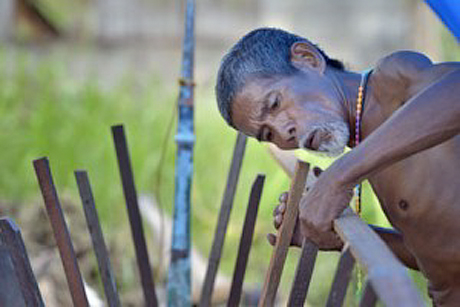
Photo Credit: ACT/Paul Jeffrey
[PWRDF] Six months ago, the most powerful typhoon in recorded history battered the Philippines, killing over 7000 and affecting millions more. PWRDF immediately sent emergency funds to the ACT Alliance rapid response. As the devastation became clearer over the ensuing days, Canadian Anglicans’ generous donations of over $750,000 enabled PWRDF’s biggest disaster response since the Haiti earthquake.
PWRDF has responded through ACT and also through direct partnerships with the Episcopal Church of the Philippines (ECP) and the Visayas Cluster of agencies. Over the last six months, ACT and PWRDF partners have reached out to provide food, water, shelter, medical aid, counselling, support getting back to work, education opportunities, and more to over a million people affected by the typhoon.

Six months after Typhoon Haiyan, the first rice harvest is happening. According to Floyd Lalwet, Provincial Secretary, Episcopal Church in the Philippines, in a report on the ECP’s ongoing work after Haiyan, this signifies a return to “normalcy” for farming communities in the Philippines, as well as the return of their ability to provide for themselves. The ECP reports that some unscrupulous dealers are lowering the prices they will pay for rice to farmers who are desperate for money to rebuild their homes and the rice drying facilities and mills in their communities.
The ECP is addressing this problem by purchasing rice from farmers at the original prices and then using the rice in “food for work projects” in other communities including the fishing village of Naungan. Naungan is home to about 1000 people, 80% of whom are fishers. The typhoon destroyed the natural coral reefs in the coves surrounding Naungan, so the local people are building an artificial reef to help improve the fishing in exchange for food.
PWRDF’s efforts have turned from immediate emergency response (provision of the immediate needs) to rehabilitation (rebuilding houses, farms, fishing, and employment opportunities). One of the goals of the rehabilitation process is to incorporate “disaster risk reduction” strategies, which include building stronger houses in locations that are better protected from typhoons. While this can slow down reconstruction, it will make for more resilient communities.
The ECP is working to improve farming knowledge and techniques as they help farmers get started again. They are teaching an organic farming technique that requires 10% less seed and other inputs—planting one hectare requires only 7kg of seed, compared to 80kg in conventional farming– and can increase production. Farmers are excited at these new techniques, and some have even volunteered their land as demonstration farms to help teach their neighbours.
Rebuilding in the Philippines will take a long time, but PWRDF’s partners are committed to accompany the affected communities through the process, and at the end of it, the communities will be stronger, the houses safer, and the economy sounder.