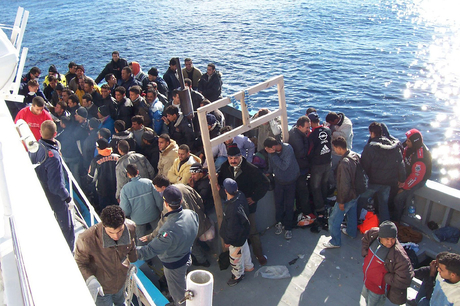
Photo Credit: Vito Manzari via Wikimedia Commons
[World Council of Churches] Deeply concerned for migrants in many regions, especially those “driven to undertake journeys of desperate risk and danger”, the Executive Committee of the World Council of Churches (WCC) has declared: “All members of the international community have a moral and legal duty to save the lives of those in jeopardy at sea or in transit, regardless of their origin and status.”
Meeting in Armenia from 7 to 12 June, the executive committee is reviewing both internal matters in the life of the WCC fellowship of churches and issues of pressing urgency to both church and world. In their public issues statement on migrants, the WCC identifies the multiple contemporary crises as “an escalating global problem, with different expressions and responses in different contexts”.
Recent examples of the fatal consequences of this issue include “the deaths of unprecedented numbers of migrants and refugees seeking to cross the Mediterranean Sea to Europe, and of Rohingya and Bangladeshi migrants on the Andaman Sea. The recent killings of Ethiopian Christian migrant workers by the so-called ‘Islamic State’ in Libya, and the xenophobic violence against migrants in South Africa, are also illustrative of the special vulnerability of people who leave their home countries in the universal human pursuit of safety and a better life for themselves and their families.”
In the statement’s conclusion, the WCC Executive Committee urges all states to provide for generous, safe and accessible procedures for the legal migration of people, calls on all governments to fulfil their moral and legal duty to save lives and to refrain from any actions that might further endanger them, calls on the members of the international community and governments to commit to stronger and more effective long-term international action to resolve the conflicts, to end oppression and occupation, and to eliminate the extreme poverty driving these population movements.
The statement also “invites WCC member churches and ecumenical partners, together with all people of goodwill, to promote a more open and welcoming approach to the stranger, and to the neighbour in need and distress.”
Read more on the WCC website.