Between 10-21 November, Anglicans attended COP30 in Belém, Brazil. They advocated to restore and oceans, forests and ice caps as ‘Lungs of the Earth’. Working alongside other faith and civil society groups, a major focus was on amplifying indigenous voices and representing the vital role faith communities play in responding to climate crisis.
Martha Jarvis is the Anglican Communion’s Permanent Representative to the United Nations (UN) and shares her reflections on the negotiations.
Anglicans at COP30 – Prioritising Indigenous Voices
This year’s COP was unofficially dubbed the ‘People’s COP’, because it was the first time in several years that it had been held in a country open to major civil society involvement. The People’s Summit ran alongside formal negotiations and served as a platform for civil society, social movements, local and indigenous communities to voice their concerns and demands for climate justice.
Anglicans played a key role in this, with the voices of indigenous people being a major priority. The Primate of Brazil and Bishop of the Amazon, the Most Revd Marinez Bassotto, hosted a ‘Tapiri’ at the Catedral Anglicana de Santa Maria, with other ecumenical and inter faith leaders. Tapiri is an indigenous word from the Tupi language, which means the house where communities gather to have conversations. Discussions included rethinking power, colonisation, production and finance systems based on indigenous wisdom.
The People’s March on November 15 was another major moment, where over 30,000 people took to the streets in Belém for peaceful demonstration to show unified support on reducing climate change and to press for justice in climate finance.
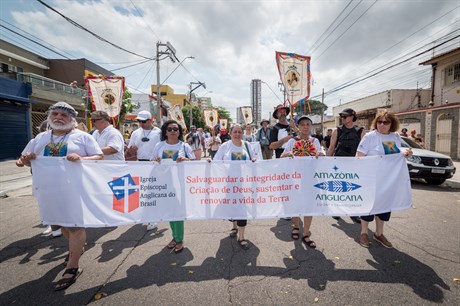
Anglicans participating alongside Archbishop Marinez in the COP’s political zone included: Ayanna Evelyn (Anglican Communion Youth Network representative from Barbados), the Most Revd Don Tamihere (Pihopa o Tairawhiti and Pihopa o Aotearora and Primate of the Anglican Church in Aotearoa, New Zealand and Polynesia) with Fe’iloakitau Kaho Tevi (Climate Change Commissioner from the same province),the Revd Isaiah Shaneequa Brockenleg (interim Indigenous Missioner for the Episcopal Church), the Rt Revd Maurico Andrade (Bishop of Brasilia) and Guilherme Gastal (representative of the Environmental Justice Working Group of the church in Brazil). The Anglican Alliance and the Communion Forest were also significantly represented.
Advocating for oceans, forests and ice caps – Encouraging outcomes
Advocating to protect oceans, forests and ice caps, many Anglicans at COP30 represented how climate crisis is impacting their communities around the world. They stressed the importance of listening to indigenous people, and highlighted the impact churches and faith groups can have in environmental restoration initiatives.
Forests
A major ‘lung of the earth’, the Amazon, was ever-present in COP30 agreements and speeches by politicians, negotiators and civil society. Brazil was successful in raising nearly 7 billion USD for its Tropical Forest Forever Facility (TFFF), a fund designed to give payments to countries maintaining the world’s largest tropical forests, de-incentivising deforestation and providing direct funding to the indigenous and local communities who protect these ecosystems.
Oceans
Negotiations made references to the specific needs of UN group of small island developing states (including the Caribbean and the Pacific). Many island nations are particularly vulnerable to climate change and their ways of life will be impossible to maintain if temperatures rise above 1.5 degrees.
The damage inflicted upon Jamaica by the recent Hurricane Melissa was also discussed. The catastrophe was an important example of why advocacy for fairer financial systems in climate disasters is so essential. The international crisis response needs to be based on grants, not loans, which only serve to deepen debt and delay nation rebuilding.
Ice caps
The importance of protecting frozen ecosystems was also brought to the fore by a young Sámi woman with the delegation from the World Council of Churches, who spoke at side events and press conferences about the experience of indigenous peoples across Scandinavia and the Arctic, where traditional living and hunting patterns in the ice caps are under threat due to changing weather and unlawful resource extraction undertaken without prior consent.
Climate Change’s disproportionate impact on women
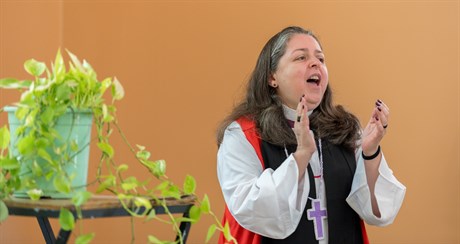
On more than one occasion, Archbishop Marinez of Brazil raised the issue of the disproportionate damage done to women’s lives by climate change in the Amazon. The passing of a ‘Gender Action Plan’ at COP30 reflects attention being given to this issue and aspects of this text were influenced by faith and civil society groups.
Health was also a central conversation in COP planning this year. The Belem Health Action Plan was launched by Brazil’s Minister for Health and the World Health Organisation (WHO), which recognises the health impacts of climate change and seeks to integrate this knowledge into national health strategies.
COP30 – a conference of mixed outcomes
News reports since COP30 have summarised the negotiations as delivering incremental progress rather than the ambitious outcomes needed to keep climate goals within reach. The Global Mutirão (collective efforts) was hailed by COP30 as a ‘historic call for humanity’ against climate change and as ‘marking a new chapter’ for the climate regime. By consensus of almost 200 countries, it reaffirmed the strong commitment to the Paris Agreement and formally endorsed a transition from a phase of complex negotiations, to a new phase focused on ‘real transformations’ in economies and societies.
Key outcomes included tripling adaptation finance by 2035, a just transition mechanism which recognised indigenous rights, and trade dialogues. Brazil's COP30 presidency also launched the Mutirão as a digital platform to unite and amplify climate action worldwide, inviting everyone from individuals to governments to contribute local and global climate solutions.
However, COP30 was unsuccessful in achieving binding commitments on phasing out fossil fuels after oil-producing nations blocked the proposal (despite support from 80+ countries). Instead, the President of COP30 compromised, announcing a voluntary roadmap, that would progress the transition outside the UN process. For the first time there was also an acknowledgment that there will likely be an overshoot of the 1.5C warming target.
Continuing from COP30: The call on the Church
Many people are starting to question if the COP process is fit for purpose and how effective negotiations really are. Given the outcomes of COP30, many agree that discussions need to do more, quicker, for those who have done the least to cause the problems and who will suffer most from their impact.
However, at a time when relationships between nations are being challenged and damaged on many fronts, there is also a need to reaffirm the value of nations coming together as equals. It is one of the founding principles of the United Nations; the importance of continuing dialogue; and the hope we have in God, who partners with us to bring about restoration.
Amidst threats to multilateralism, a new paradigm is possible in which faith groups and international actors work more effectively together through mutual respect, trust and increased dialogue, to see genuine change at local level.
At COP30, several political leaders recognised the valuable space that the Church occupies. Whatever shape the next COP takes, our task now is to work where change can be most effective - in our local area and with national governments to ensure they:
- Keep their promises on climate finance so all nations can thrive.
- Speed the just transition away from fossil fuel dependency.
- Support communities on the front line of the climate crisis.
- Listen to indigenous wisdom that has cared for creation over generations.
Read more about how your church can advocate for ‘Lungs of the Earth’.
Photo credits: LWF / Albin Hillert