DRC and neighbouring Uganda are seeing another outbreak of the deadly Bundibugyo Ebola strain. The World Health Organisation (WHO) has recorded 10 confirmed and 223 suspected Ebola deaths since the outbreak was declared on 15 May, among more than 1,000 confirmed and suspected cases.
Around the world, Anglican churches, networks and charities are working to assist humanitarian response. A major focus is handling misinformation and overcoming practical barriers to care, while offering pastoral support, public health guidance and hope to those affected.
The role of the local church in responding to the outbreak
The Most Revd Georges Titre Ande, Archbishop of the Democratic Republic of the Congo and Bishop of Aru, has stressed the need for 'prayers and practical action' in response to the Ebola outbreak in DRC and Uganda. In Anglican News on May 18 he said: 'For years, living in the east of the DRC has been possible by God’s amazing grace. The rhythm of life for the population is marked by suffering upon suffering and misfortune upon misfortune. As if that were not enough, whilst efforts are being made to bring about peace, a new epidemic known as Ebola has just emerged, with no treatment or vaccine in sight, already claiming many victims in Bunia and the surrounding area, even amongst healthcare workers.
'Given that population density is so high, particularly in towns, with massive movements of people, even from province to province, there is a risk that the spread of infection will accelerate. However, practical measures are being taken swiftly, with an international alert in place. This is what gives the population hope.' He urges: 'It is important to combine prayers with practical action.'
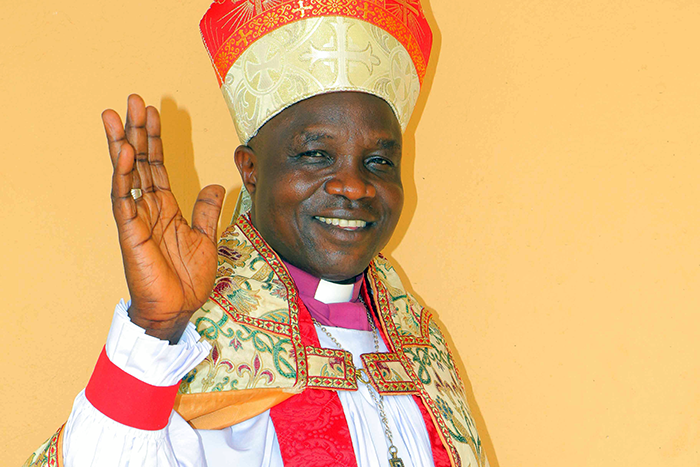
The Most Revd Georges Titre Ande, Archbishop of the Democratic Republic of the Congo and Bishop of Aru.
The Rt Revd Martin Gordon is the Bishop of Goma in the Province de L’Eglise Anglicane du Congo. He relays that the outbreak is focused in Ituri in the north of the DRC and in Uganda, but that confirmed cases of the Bundibugyo strain have also been reported in his diocese in eastern DRC. ‘Detection was slow in the beginning, partly because the tests are not as effective and the symptoms are different from the previous Zaire strain’, he observes.
‘The situation is dire in a region where USAID cuts in recent months have decimated health monitoring and where 10 million people live under the M23 rebel authorities’, according to Bishop Martin. ‘For this Bundibugyo strain, there is no treatment… no cure and a vaccine is a few months away at best.’
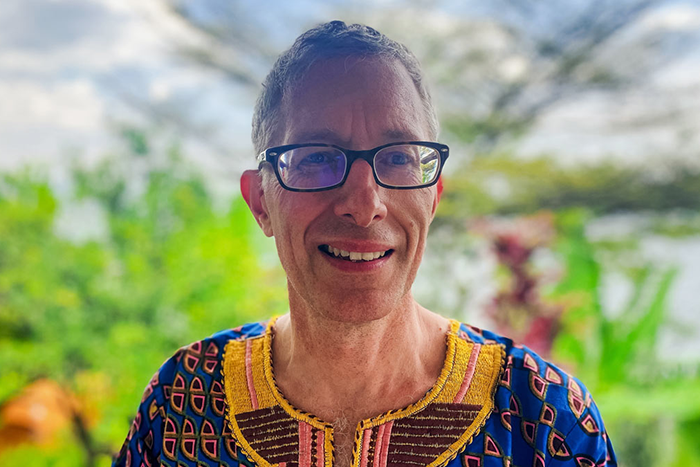
The Rt Revd Martin Gordon, the Bishop of Goma in the Province de L’Eglise Anglicane du Congo, shares how the church is responding to the 17th Ebola outbreak.
Tackling Misinformation
Tackling misinformation is a huge challenge. Bishop Martin explains that ‘reliable information is really hard to come by’ and that there is ‘huge scepticism amongst much of the population as to the existence of Ebola and a real mistrust of the medical centres’. In some cases, this mistrust has led people to storm treatment centres to retrieve the bodies of loved ones for traditional burials, despite the strict safe-burial protocols needed to prevent further transmission. Some local groups have set fire to two Ebola treatment centres.
How is the church responding? Bishop Martin describes the Church as being on the ‘front line of Ebola response’ and that it runs ‘a huge amount of health centres across the country… We’re one of the few institutions in Congo still trusted to tell the truth.’
The Church is also working ecumenically to address misinformation. Together, they are working to share best practices on infection prevention and ‘replace messages of fear with messages of hope’. He hopes his diocese will soon be able to equip churches and schools with temperature monitors to support early detection.
Infrastructure and testing
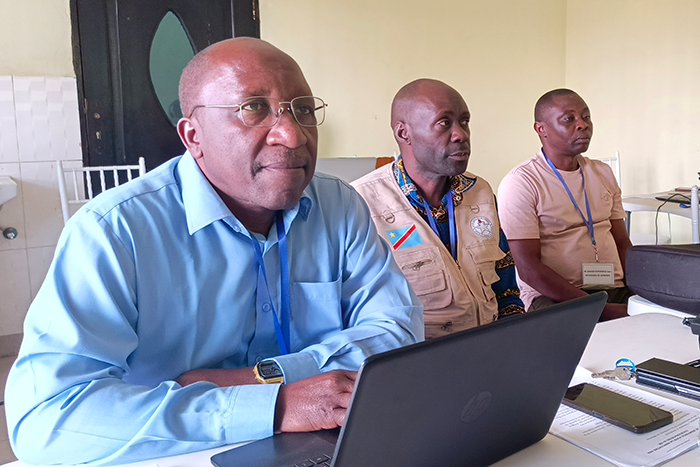
Dr Raymond Gbombo Bachongo (left), meeting with the other Diocesan medical coordinators for the Anglican Church of Congo.
Dr Raymond Gbombo Bachongo is the Medical Services Coordinator for the Anglican Church of Congo. He explains that local healthcare facilities, including clinics and health centres, have limited resources to diagnose and manage Ebola, particularly when it comes to personal protective equipment. He describes the lack of access to eye and face protection as ‘a sad reality’.
Poor road conditions in DRC also create serious challenges in getting patients to treatment centres, which increases the risk of Ebola spreading. Dr Raymond is urging for improvements to road infrastructure to be made, in order to support universal health coverage, protect healthcare workers and secure humanitarian corridors for the delivery of aid.
One of the most urgent needs is funding for testing resources. Dr Raymond explains that many are ‘Having to wait a long time to find out if a patient is positive’. It can result in people with symptoms leaving health facilities and potentially becoming another source of infection.
Anglican involvement in international response
Anglican Groups like the Anglican Health and Community Network (AHCN) and the Anglican Alliance are playing a major role in advocacy and humanitarian response.
They joined a recent meeting convened by the WHO Faith Network on 22 May. The aim of the meeting was to learn how health structures and faith-based organisations are responding and to discuss how they can collaborate most efficiently.
Anglican organisations have also joined a broad coalition of major international partners on the front lines of the outbreak, including the Uganda Catholic Medical Bureau, ACT Church of Sweden, Caritas, African Council of Religious Leaders-Religions for Peace, the Africa Christian Health Associations Platform (ACHAP) in both DRC and Uganda, IMA World Health, World Vision, CCIH and Corus International.
Episcopal Relief & Development is partnering with the Anglican Church of the Congo (Provincial Eglise Anglicane du Congo) to support government efforts to prevent the spread of Ebola in parts of the Democratic Republic of the Congo (DRC) including Boga, Aru, Beni, Butembo, Kisangani and Goma.
The Anglican Alliance
The Anglican Alliance is supporting the response by convening Anglican agencies, companion links, networks and institutions to accompany the Church through prayer and practical support.
Nicholas Pande (Resilience & Disaster Response Lead and Communion Forest Global Facilitator for the Anglican Alliance) shares that the recent ‘outbreak has once again exposed the tension between public health protocols and cultural burial practices, with communities reportedly storming health facilities to retrieve Ebola victims’ bodies — a behaviour that significantly heightens transmission risk. In response, clergy and church health workers are leading mass awareness campaigns on prevention, challenging risky practices such as touching the deceased, while facilitating dignified burials — underscoring the church’s unique and critical role in emergency response, given its deep community presence and trust.’
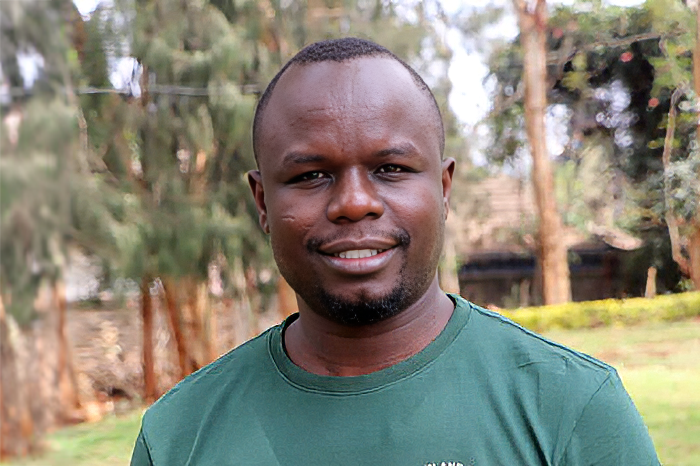
Nicholas Pande, Resilience & Disaster Response Lead and Communion Forest Global Facilitator for the Anglican Alliance
Rob Dawes (Executive Director at the Anglican Alliance) observes that ‘Amid the profound suffering and loss that Ebola brings, it is vital to recognise the quiet but pivotal role of the Church. Drawing on deep experience, trusted leadership and a proven track record, faith communities help translate public health guidance into local action and have repeatedly been central to bringing outbreaks under control.’
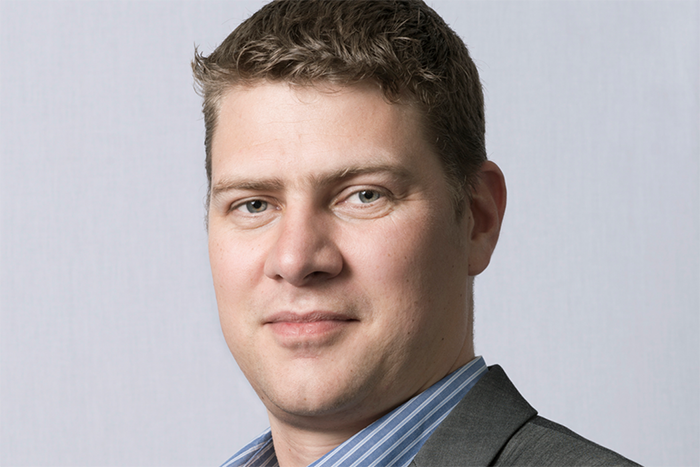
Rob Dawes, Executive Director at the Anglican Alliance
The Anglican Health and Community Network
The Anglican Health and Community Network is helping to connect the technical and practical knowledge of Anglicans working in healthcare with those responding to the outbreak. It is also helping to represent the needs expressed by the local Church to international and regional actors.
According to AHCN, at the end of 2025, the Anglican Church of Congo was responsible for 171 health structures across DRC, including health centres and hospitals. Some have since ceased to operate because of the ongoing conflict, but the Church remains a significant presence in public health in many communities.
Prayers from around the Communion regarding the Ebola outbreak
The Rt Revd Brian Melvin Marajh (Bishop of Kimberly and Kuruman in the Anglican Church of Southern Africa) has shared a pastoral letter calling for prayer. Bishop Brian wrote, ‘We uphold before God all families who have been affected and afflicted by this devastating illness, asking the Lord to grant them comfort, healing and hope during this difficult time.’
A prayer by Anglican Aid urged: ‘Please be with the local authorities and the World Health Organisation as they seek to respond rapidly and effectively. Give them wisdom as they make decisions, provide them with the resources needed for treatment, and help them contain the spread. Protect health workers from the virus and keep them healthy.’
In a recent video, Bishop Martin (of Goma) called for ‘a quick mobilisation of resources to test, isolate and treat patients, for safety for health workers, for effective awareness-raising, that the political tensions would not hamper the response, for the quickest possible development of a treatment and of a vaccine and that churches would continue to be the voices of hope.’
The Anglican Relief and Development Fund (ARDF) recently published a prayer adapted from the Collect for the Medical Professions, Book of Common Prayer (2019). ‘Almighty God, whose blessed Son Jesus Christ went about doing good, and healing all manner of sickness and disease among the people: Console and heal the sick; grant to the physicians, nurses, and assisting staff wisdom and skill, diligence and patience; prosper their work, O Lord, and send down your blessing upon all who serve the suffering; through Jesus Christ our Lord. Amen.’
A prayer from the Episcopal Public Policy Network (The Episcopal Church) is ‘for all those who are sick or have died amid outbreaks of infectious disease, including Ebola, in the Democratic Republic of Congo and East Africa. As violence and displacement deepen suffering, help medical workers and public health systems to stem the outbreak and prevent further sickness and death. Protect all the vulnerable in Congo and the surrounding countries.’
More information
The Anglican Alliance has launched an appeal to assist churches on the front line of the Ebola outbreak. For more information on how you can support the coordinated appeals and the Anglican Church in Congo, email nicholas.pande@anglicanalliance.org.
See a video update from the Anglican Bishop of Goma in DRC.
Find out more about the Anglican Alliance.
See a recent article from Anglican News with insights from the Primate of the Anglican Church in Congo.
Find out more about the Anglican Health and Community Network.